Beyond the Sip: A Full-Sensory Guide to Tasting Beer the Right Way
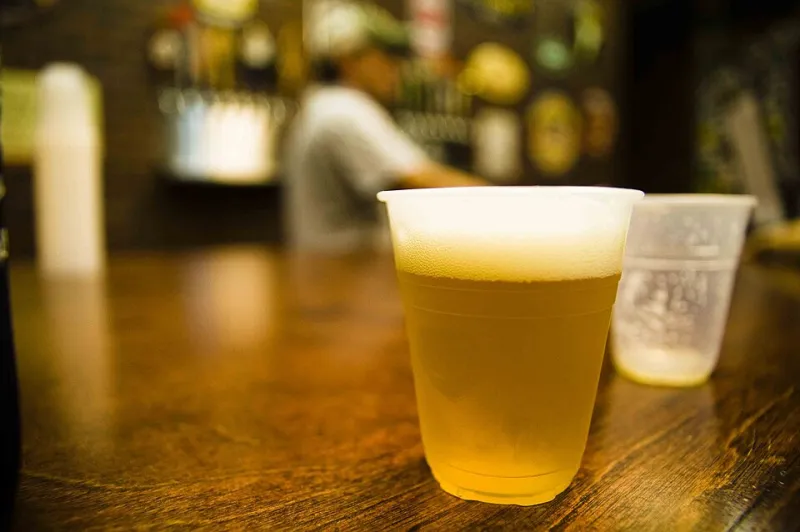
Photo: TheDigitel Beaufort from Beaufort, SC, USA, CC BY 2.0, via Wikimedia Commons
Here's a humbling truth about human perception: most of us are terrible at tasting things. Not because our senses don't work, but because we almost never actually use them. We drink beer the way we scroll through our phones — quickly, partially, while thinking about something else.
Sensory scientists who study food and beverage perception estimate that the average person consciously registers only a fraction of the flavor information available in any given sip. The rest gets processed in the background, filtered out, or simply missed. That's true for wine, for coffee, and absolutely for beer — which, given its complexity, might be the most underappreciated beverage on the planet.
The good news is that tasting well is a learnable skill. It doesn't require special equipment, professional training, or anything more exotic than a quiet space, a clean glass, and a willingness to slow down. What follows is a practical, sensory-by-sensory guide to experiencing beer the way it's actually designed to be experienced.
Set the Stage Before You Pour
Before you touch the bottle, a few logistics matter more than most people realize.
Temperature is the big one. Serving beer too cold is one of the most common ways to flatten the tasting experience. Cold suppresses aroma compounds and numbs the palate. A standard American lager is engineered to be served ice-cold because the style doesn't have much going on aromatically — but a complex IPA, a barrel-aged stout, or a farmhouse ale served at 38°F is giving you maybe 40% of its flavor profile. Most craft styles are best between 45°F and 55°F. If you're pulling something straight from the fridge, let it sit on the counter for ten minutes first.
Glassware matters too, though not for pretentious reasons. A tulip glass or a snifter concentrates aromatics toward your nose in a way that a pint glass simply doesn't. You don't need a dedicated glass for every style — a tulip handles most situations well. And make sure it's clean, free of dish soap residue, and ideally not straight from the dishwasher. Residual detergent kills foam and mutes aroma.
Finally, context. This is underrated. Your brain's ability to perceive flavor is genuinely affected by background noise, strong ambient smells (candles, cooking, perfume), and mental distraction. If you want to do a real tasting, do it somewhere reasonably quiet, away from strong competing odors, when you're not hungry or overly full.
Sight: The First Conversation
Hold your glass up to a light source and look at it for a full ten seconds. This sounds excessive until you start noticing things.
Color tells you about the malt bill — pale gold suggests pilsner or Vienna malt, amber signals crystal malts, deep brown and black point to roasted or chocolate malts. Clarity tells you about filtration and yeast activity; a hazy beer isn't inferior to a clear one, it's just different. A New England IPA's haze comes from specific proteins and yeast; a Belgian witbier's cloudiness is suspended wheat proteins. Neither is a flaw.
Then there's the head. Watch how it forms and how long it holds. A thick, persistent foam indicates good carbonation and healthy proteins. A head that collapses in seconds might mean the glass has residue on it, or that the carbonation is low. The foam also traps aroma compounds — burying your nose in it before you even sip is a legitimate tasting move.
Sound: The Overlooked Sense
Sound gets left out of almost every beer tasting guide, which is a shame. Pour your beer and listen. The hiss of carbonation, the soft pop of a well-conditioned bottle-conditioned ale, the quiet fizz as the head settles — these are all real data points. High carbonation will sound different from low. A beer that pours nearly silent might be undercarbonated or very still by design, like a cask ale.
This isn't about inventing meaning where there isn't any. It's about training your brain to be present for the full experience. Sensory scientists call this cross-modal perception — the way input from one sense shapes the interpretation of another. Hearing the carbonation primes your palate to notice it.
Smell: Where Most of the Flavor Lives
Here's the science that changes everything: roughly 70 to 80 percent of what we perceive as "flavor" is actually aroma, processed retronasal — meaning through the back of the throat as you breathe out after swallowing. Taste buds only detect five basic qualities (sweet, salty, sour, bitter, umami). Everything else — the citrus in your IPA, the vanilla in your stout, the clove in your hefeweizen — is smell.
This means the nose is where tasting really begins. Give your glass two or three short sniffs before you sip. Don't inhale deeply — you'll overwhelm your receptors. Quick, light passes. Then breathe out and notice what surfaces. Hop aromatics tend to be volatile and fade quickly, so catch them first. Malt-forward beers will show grain, bread, or caramel. Fermentation character — esters and phenols — will emerge as the beer warms.
After those initial sniffs, swirl gently and smell again. Agitation releases different aromatic compounds. You'll often get a second wave of something you didn't catch the first time.
Taste: Slow Down Considerably
Take a small sip — smaller than you think you need — and let it sit on your tongue for three to four seconds before swallowing. This sounds awkward but it's genuinely transformative.
Work through the flavors in sequence. What hits first? Sweetness usually registers on the tip of the tongue and tends to arrive early. Bitterness builds at the back and sides and lingers. Sourness hits the sides of the tongue quickly. Notice the carbonation — is it fine and soft, or sharp and aggressive?
After you swallow, pay attention to the finish. How long does the flavor linger? Does it evolve? A good imperial stout might show dark fruit right after the swallow, then slowly shift toward coffee and dark chocolate as the finish extends. That evolution is called the aftertaste arc, and it's one of the most telling indicators of a well-crafted beer.
Touch: The Texture You're Missing
Mouthfeel is the tactile dimension of tasting, and it's constantly underappreciated. Body — light, medium, or full — is a physical sensation, not a flavor. Carbonation level creates a literal tingle. Astringency (common in some darker beers) creates a drying, almost grippy sensation. Creaminess, viscosity, warmth from alcohol — all of these are touch, not taste.
Notice them. They're part of the complete picture.
Put It Together
A full sensory tasting of a single beer, done properly, takes about five minutes. That's not a long time. But it's a fundamentally different experience from cracking a can and drinking while watching TV — not better in every context, but richer, more deliberate, and genuinely more satisfying when that's what you're going for.
The beers that reward this kind of attention most are the ones that were made with it. The brewer who spent weeks crafting a complex fermentation profile, dry-hopping in multiple stages, or aging on wood — they made something meant to be explored. Giving it five minutes of real attention is, in a quiet way, the right response.
Pour something good. Take your time. There's a lot more in there than you've been catching.