Hush, Sip, Repeat: Inside the Quiet Tasting Rooms Changing How We Experience Beer
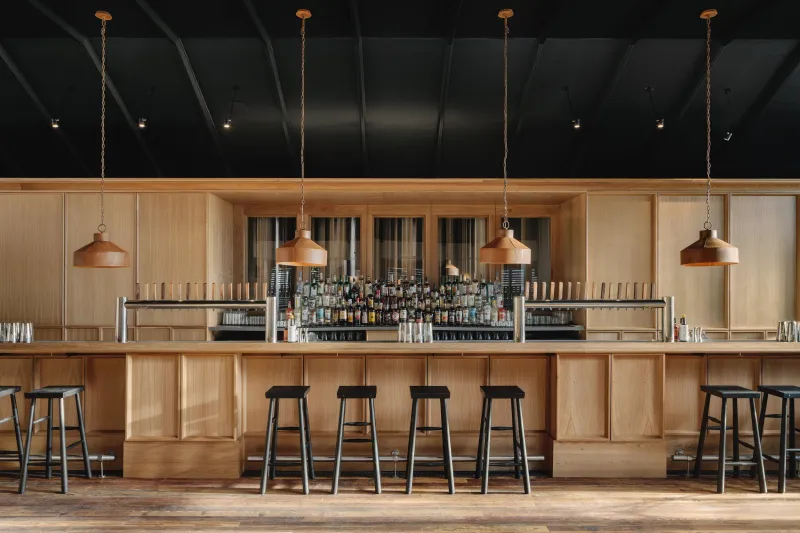
Photo: quiet serene brewery tasting room minimal interior soft lighting, via i.pinimg.com
Walk into most taprooms on a Friday night and you'll get the full sensory package — laughter bouncing off exposed brick, a playlist fighting for airspace, the percussive clatter of pint glasses. It's a good time, no question. But a quieter revolution is brewing on the edges of the craft beer world, and it's asking a genuinely interesting question: what happens to your beer when you actually shut everything else out?
Across the country, a handful of forward-thinking breweries are experimenting with intentional silence as a tasting tool. Not the awkward hush of an empty bar, but a curated, almost ceremonial stillness designed to strip away distraction and let the beer do all the talking.
Why Silence Makes Your Beer Taste Different
This isn't just a vibe choice. There's real science behind it.
Dr. Charles Spence, an experimental psychologist at Oxford whose work has influenced everything from airline food to restaurant design, has spent years studying how ambient sound shapes flavor perception. His research consistently shows that loud, chaotic environments dull our sensitivity to subtle tastes — particularly bitterness and sweetness — while also suppressing our ability to detect aromatic complexity. In short, noise is literally making your beer taste worse.
"The brain is always prioritizing," explains one sensory neuroscientist familiar with Spence's broader body of work. "When you're processing a loud environment, cognitive resources are diverted away from taste and smell processing. Quiet isn't just pleasant — it's physiologically freeing up bandwidth for flavor."
For craft beer, where a single glass might carry notes of stone fruit, toasted grain, earthy hops, and a whisper of vanilla from oak aging, that freed-up bandwidth matters enormously.
Breweries Putting the Theory Into Practice
Some breweries are taking this seriously enough to redesign their physical spaces around acoustic principles. Sound-dampening ceiling panels, soft furnishings, and deliberate room layouts that prevent echo are showing up in newer taproom builds. A few have gone further, hosting structured silent tasting events where phones are pocketed, background music is absent, and guests are guided through a flight with nothing but a tasting card and their own senses.
One Midwest brewery owner who runs monthly "still sessions" describes the first few minutes as reliably uncomfortable. "People don't know what to do with themselves," she says. "They're so used to filling silence. But by the second pour, something shifts. They start leaning in. They start actually smelling before they drink. The conversation that comes after is always the richest we have all month."
That shift she's describing has a name in mindfulness literature: presence. When external stimulation drops, attention naturally turns inward — and inward, in this context, means toward the glass.
The Meditative Quality of a Well-Made Beer
There's something almost sacred about the idea that a beer, brewed with patience and intention, deserves to be received the same way. It's a philosophy that sits comfortably at the heart of what craft brewing is supposed to be about — not volume or velocity, but care.
Monastic brewing traditions understood this intuitively. The Trappist breweries of Belgium, some of the most revered in the world, were born from contemplative communities where silence was a daily practice. The beer they made wasn't incidental to that culture — it was an expression of it. American craft brewers drawing inspiration from those traditions are starting to realize you can't fully honor the beer if the environment it's consumed in is working against the drinker's ability to perceive it.
Some breweries are framing their quiet tasting sessions explicitly as mindfulness experiences, borrowing language and structure from meditation practice. Guided breathing before the first pour. Prompts to notice physical sensations — the weight of the glass, the temperature against the palm — before the first sip. Slow, deliberate drinking that treats each mouthful as something worth sitting with.
What You Can Do Right Now
You don't need a brewery with acoustic ceiling tiles to try this at home. The principle is simple: reduce input, increase attention.
Next time you open something you've been saving — a barrel-aged stout, a dry-hopped saison, a hazy IPA from a brewery you've been curious about — try turning off the TV. Put the phone face-down. Pour into a proper glass, something with a little curve to concentrate aroma. Sit somewhere comfortable and quiet.
Smell it before you taste it. Really smell it — not a polite sniff, but a slow, curious inhale. Then taste slowly, letting the beer move across different parts of your palate. Notice where the bitterness lands. Notice whether the finish is dry or lingering. Notice if the flavor changes as it warms slightly in your hand.
It sounds simple because it is. But most of us have never actually done it.
The Bigger Shift
The quiet tasting movement is part of a broader cultural reckoning with how we consume — not just beer, but everything. In a world that's relentlessly loud and fast, the act of slowing down and paying attention has started to feel genuinely countercultural.
Craft beer has always positioned itself as the thoughtful alternative to mass-produced drinking. Silent and semi-silent tasting experiences are the logical extension of that identity — a way of saying that the beer in your glass deserves more than half your attention.
At Sanctum Brewing, that idea resonates deeply. Every pour should be a sacred experience. And sometimes, the most sacred thing you can do is simply get quiet enough to hear it.