Rooted in Place: How American Brewers Are Letting the Land Shape the Beer
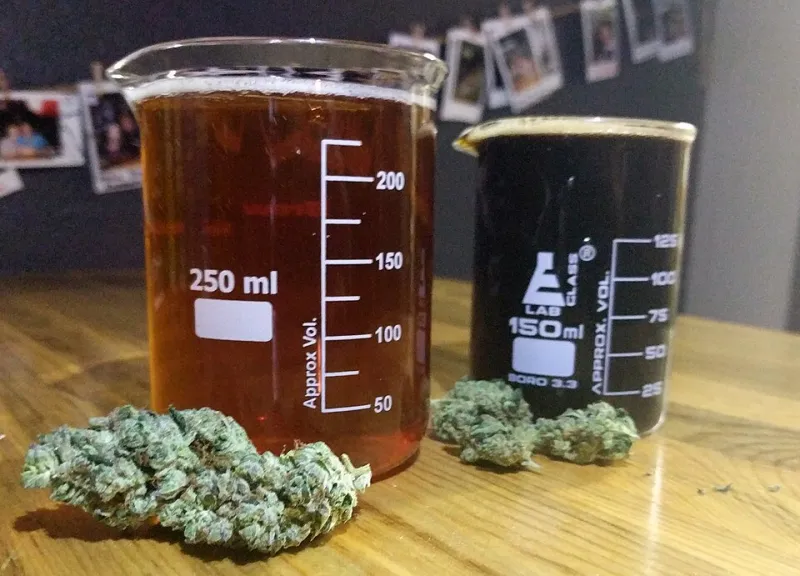
Photo: My 420 Tours, CC BY-SA 4.0, via Wikimedia Commons
Ask a sommelier about terroir and they'll talk for an hour. Ask most craft beer drinkers the same question and you'll get a polite nod and a quiet pivot toward the tap list. But that's changing. Slowly, persistently, and with real conviction, a growing community of American brewers is making the case that beer has a sense of place just as profound as any Burgundy or Napa Cab — and that the most honest thing a brewery can do is let that place speak.
Terroir, borrowed from French wine culture, describes the way geography, climate, soil, and local tradition shape what ends up in the glass. For wine, it's an accepted gospel. For beer, it's a frontier.
Water: The Invisible Ingredient
If you want to understand why place matters in brewing, start with water. It makes up more than 90% of every beer and carries a mineral fingerprint as distinctive as a thumbprint. The calcium sulfate-heavy water of Burton-on-Trent in England defined the character of its famous pale ales — bright, crisp, aggressively hoppy. The soft water of Pilsen in the Czech Republic made a different kind of beer possible: the clean, round lager that became the most imitated style on the planet.
American brewers are starting to pay the same attention to what's coming out of their local taps and wells.
In Colorado, breweries drawing from Rocky Mountain snowmelt work with water that's exceptionally soft and low in dissolved minerals — an ideal canvas for showcasing delicate hop aromatics without interference. In contrast, breweries in limestone-heavy regions of the Midwest pull from aquifers that add calcium and bicarbonate, lending a subtle roundness that works beautifully in malt-forward styles like amber ales and stouts.
"Water isn't just a vehicle," says one Colorado brewer who has built a reputation for hyper-local lagers. "It's an active ingredient. When we stopped adjusting our water to match some European profile and just started brewing with what we have, the beers got more honest. They got more ours."
Local Grain, Local Flavor
Water is the foundation, but it's not the whole story. A new generation of brewers is sourcing grain from regional maltsters, partnering with farms sometimes within a few counties of the brewery, and using ingredients that simply don't exist anywhere else.
In the Pacific Northwest, breweries are working with heritage wheat varieties grown in the Palouse region of eastern Washington — a grain belt that produces some of the finest soft white wheat in the country. The resulting beers carry a subtle earthiness and a creamy body that commercially produced wheat can't replicate.
In New England, breweries are experimenting with locally grown barley from Maine and Vermont farms, some of which had largely abandoned malting barley decades ago and are now reviving it specifically to supply the regional craft beer industry. The economic loop is intentional: local beer driving local agriculture, local agriculture shaping local beer.
Down in the South, a cluster of breweries in North Carolina and Georgia are incorporating heritage corn varieties, sorghum, and even locally foraged botanicals into their recipes — less as a novelty and more as a genuine attempt to make beer that tastes like where it came from.
Hops and the Hyperlocal Frontier
Hops are where terroir gets most contentious, partly because the American hop industry has historically been concentrated in a single region: the Yakima Valley of Washington State, which produces the majority of the country's commercial hop supply. For a long time, the idea of regional hop character in American brewing was almost theoretical.
But small-scale hop farming is spreading. Experimental hop yards are producing in Michigan, New York, Colorado, and across the Southeast. These aren't commodity operations — they're small plots growing experimental varieties, some proprietary, some wild-harvested, some developed in partnership with universities and breeding programs. The yields are modest, the prices are high, and the brewers who use them will tell you there's no substitute.
"A wet hop from a yard twenty miles away tastes completely different from the same variety kilned and shipped from the West Coast," explains a New York State brewer who harvests fresh hops each September for an annual estate ale. "There's a greenness to it, a kind of raw vitality. You can't manufacture that. You just have to be here."
What This Means for the Next Generation of Craft Brewers
The terroir conversation is reshaping how younger brewers think about their role. Where an earlier generation of American craft brewers defined themselves against the industrial giants — more flavor, more creativity, more freedom — this new cohort is defining themselves against placelessness itself. The enemy isn't Bud Light; it's a beer that could have been made anywhere.
Brewery programs at culinary schools and fermentation science programs at universities are increasingly incorporating local sourcing and regional ingredient literacy into their curricula. The question "where does this come from?" is becoming as fundamental as "what style is this?"
For consumers, this shift offers something genuinely exciting: the chance for American craft beer to develop regional identities as distinct and legible as American wine appellations. A Colorado lager that tastes like mountain snowmelt. A coastal California saison that carries the salinity of Pacific fog. A Tennessee farmhouse ale that owes its character to a grain grown ten miles from the kettle.
The Sacred Geography of a Good Beer
There's something humbling about a beer that knows where it came from. It asks you to pay attention not just to flavor, but to story — to the water table beneath a particular valley, the hands that harvested a particular harvest, the specific latitude and rainfall that shaped a particular crop.
Craft beer has always been about intention. Terroir-driven brewing takes that intention further, rooting it in something larger than any single brewer's vision. It's the land collaborating with the craft.
And when you taste a beer that genuinely reflects its place — that couldn't exist anywhere else, made from ingredients that grew in a specific soil under a specific sky — that's when the pour stops being just a drink and starts being something closer to a conversation with the ground beneath your feet.