Brewed in Silence: How Monastic Traditions Are Quietly Transforming American Craft Beer
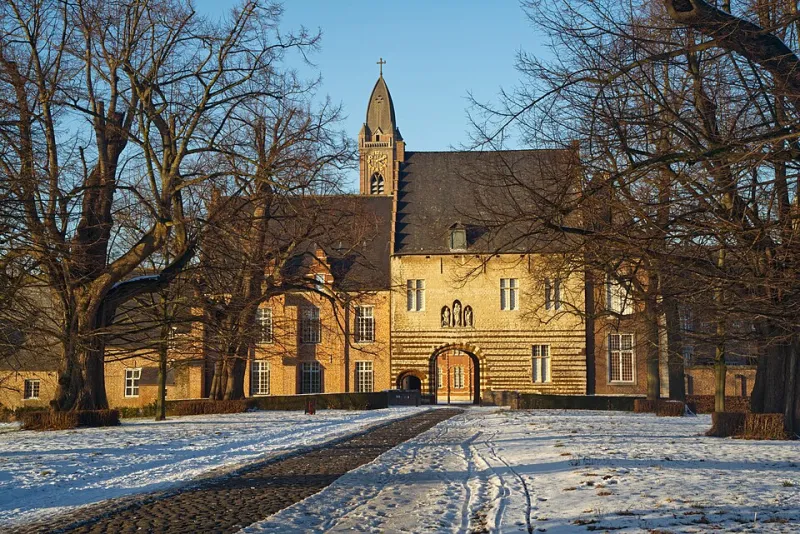
Photo: Habbajaba, CC BY-SA 4.0, via Wikimedia Commons
Long before craft beer became a cultural movement, monks were perfecting the art of intentional brewing behind stone walls and in candlelit cellars. Today, a growing number of American brewers are reaching back to those contemplative roots — and what they're pulling forward is changing the way we think about what's in the glass.
There's something almost countercultural about it. In an industry that's celebrated for its speed — new releases dropping every week, hazy IPAs churned out before the last keg kicks — some brewers are choosing to slow everything down. Way down. They're fermenting for weeks instead of days. They're sourcing single ingredients with the kind of care you'd expect from a Michelin-starred kitchen. Some are even building quiet into the brewery itself, treating the brewing floor less like a production space and more like a place of practice.
It sounds unusual. But when you look at the history, it makes complete sense.
A Tradition Older Than the Industry Itself
Monastic brewing traces back over a thousand years, most famously to Belgian Trappist abbeys like Westvleteren, Rochefort, and Chimay. These weren't commercial operations — they were expressions of a way of life. The monks brewed with purpose and patience, guided by the belief that good work done slowly and mindfully was, in itself, a form of devotion.
The Reinheitsgebot, the German purity law of 1516, gets a lot of credit for shaping beer history — but the monastic tradition runs deeper and quieter. It's less about rules and more about relationship: the brewer's relationship with ingredients, with time, with the people who would eventually drink the beer.
American craft brewers have long borrowed the styles — dubbels, tripels, quadrupels, abbey ales. But a newer wave is borrowing something harder to bottle: the philosophy.
Slowing Down on Purpose
At a small farmhouse brewery in Vermont, the head brewer describes his process as "listening work." He cold-conditions his saisons for up to six weeks, checking in daily not to adjust, but simply to observe. "Most of brewing is waiting," he says. "The monks understood that. You can't rush fermentation any more than you can rush a good conversation."
This kind of intentional patience shows up differently from brewery to brewery. In Oregon, one operation has adopted what they call a "single-task" brewing day — no phones on the floor, no music, no multitasking. Just the brewer and the process. The results, they say, aren't just spiritual. They're measurable. Fewer off-flavors. More consistent batches. A quieter brewery, it turns out, makes better beer.
In North Carolina, a husband-and-wife team sources all their grain from within a 150-mile radius — not just for the local cred, but because knowing the farmer who grew the barley changes how they treat it. "When you've stood in the field where your malt came from," she explains, "you don't rush it through a kettle."
Ingredient Mindfulness: The New Sacred Practice
One of the most striking ways monastic philosophy is showing up in modern craft brewing is in how brewers relate to their raw materials. Trappist monks historically grew much of what they used — herbs, fruit, even hops — within the abbey grounds. That intimacy with ingredients wasn't just practical. It was theological.
Today's mindful brewers aren't necessarily growing their own hops (though some are), but many are developing the same kind of close, reverent relationship with what goes into the kettle. Water chemistry gets treated with near-scientific obsession. Yeast strains are maintained and studied like living documents. Adjuncts — honey, spices, fruit — are sourced with the same scrutiny you'd apply to a wine's terroir.
This isn't the same as "craft for craft's sake." It's a genuine shift in how brewers understand their role. Less technician, more steward.
The Meditative Brewhouse
Ask any experienced brewer what they love about the job, and you'll often hear something unexpected: the repetition. The mashing, the sparging, the monitoring of temperatures — there's a rhythm to it that many describe as almost meditative. The monastic tradition simply names what brewers have always felt.
Some breweries are leaning into that explicitly. A few have begun incorporating intentional pauses into their brewing days — moments of stillness before the boil, or a shared meal before packaging. One brewer in Colorado described starting each batch with what he calls a "gratitude check" — a minute of quiet acknowledgment for the ingredients, the process, and the people who'll eventually drink the beer. "It sounds weird," he admits, "but it actually makes me a better brewer. I'm more present. I catch things I'd otherwise miss."
These aren't grand gestures. They're small, deliberate acts of attention — which is, at its core, exactly what monastic brewing has always been.
Beyond the Style Guide
What's remarkable about this movement is that it's not really about making Belgian ales. Plenty of the brewers drawing on monastic philosophy are making lagers, stouts, and West Coast IPAs. The tradition they're borrowing isn't stylistic — it's spiritual.
And drinkers are noticing. There's a growing segment of craft beer enthusiasts who can tell, somehow, when a beer was made with care. It's hard to quantify, but it shows up in the way a beer finishes, in the way it holds complexity over time, in the way it invites you to slow down rather than chug and move on.
That's the real legacy of the monk's method: not a recipe, but a posture. A way of showing up to the work that makes the work mean something.
At Sanctum Brewing, we think that's worth raising a glass to — slowly, and with full attention.