Turn It Up, Taste It Differently: The Breweries Treating Sound Like an Ingredient
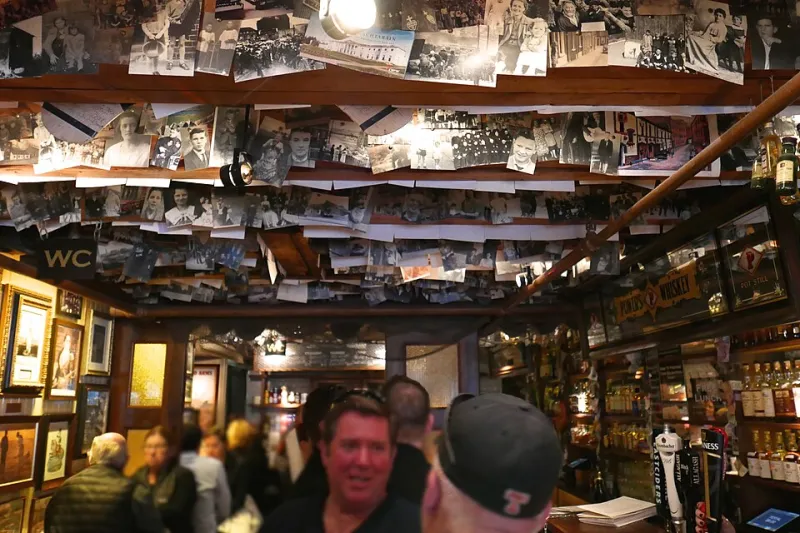
Photo: loustejskal.com, CC BY 2.0, via Wikimedia Commons
Somewhere in Portland, a brewer adjusts the EQ on a taproom speaker the way another might tweak a mash temperature. Down in Asheville, a barrel program has an opinion about low-frequency hum. And in a lab in Oxford, Ohio, a psychologist is explaining why your IPA tastes brighter when the room sounds bright.
Sound, it turns out, is the most neglected ingredient in craft beer. And a small but growing group of breweries is done neglecting it.
The Flavors You Can Hear
The science here isn't fringe. Charles Spence, the Oxford University gastrophysicist whose work has been cited in everything from airline cabins to fine dining rooms, has spent two decades demonstrating that auditory cues reliably shift taste perception. Higher-pitched sounds tend to enhance sweetness and brightness. Lower, heavier tones can amplify bitterness and body. In one frequently cited study, participants described the same chips as fresher when they heard a crisper crunch through headphones.
Beer is no exception. Spence's collaboration with the Crossmodalism movement produced the famous "sonic seasonings" for a stout and a lager — soundscapes engineered to make the same beer taste sweeter or more bitter depending on what played over the speakers.
American brewers have been paying attention.
Taprooms With a Tuning Fork
Walk into most taprooms and the audio is an afterthought: a Bluetooth speaker in a corner, a shuffled playlist, whatever's trending. But a handful of breweries now treat their rooms the way recording studios do.
Consider the quiet design movement rippling through new builds in Denver and Minneapolis. Acoustic panels disguised as art. Ceilings angled to scatter clatter rather than bounce it back. Zones calibrated for different volumes — a lively front bar for groups, a hushed back room where a barrel-aged barleywine can actually get the attention it deserves.
"We spent more time on the sound of the room than the paint colors," one Midwest brewer told me, only half-joking. "Nobody's ever said a beer tasted better because the walls were gray. But a screaming room? That flattens everything."
Some breweries go further. A few have commissioned custom playlists built around their core lineup — bright, higher-register tracks paired with pilsners and saisons; warm, low-slung soul and dub for stouts and porters. Others schedule the music to shift with the day, lighter sounds with the lunch crowd, deeper tones as the evening pours get darker.
And then there's the genuinely weird end of the pool: sonic barrel-aging. A handful of experimental programs around the country have mounted transducers directly onto tanks or barrels, playing music — everything from hip-hop to opera — to the beer itself. The science is, generously, unsettled. The folklore is delightful. Brewers who do it swear the vibration keeps yeast in suspension and the ritual keeps the room inspired. Skeptics call it marketing. Both might be right, and honestly, both are on brand for craft beer.
Build Your Own Listening Room
You don't need a sound engineer to bring this home. A few principles translate directly to your kitchen, porch, or garage fridge:
- Match register to body. Crisp, high-frequency music — jangle pop, bright jazz, bluegrass — flatters lagers, wheat beers, and hoppy pales. Low-end-heavy sounds — dub, slow R&B, doom-adjacent anything — lean into stouts, porters, and big barleywines.
- Lower the volume, raise the attention. Background music at conversation level forces you to actually taste. Loud rooms make us drink faster and notice less.
- Kill the clatter. Hard surfaces are the enemy. A rug, a curtain, even a bookshelf against a bare wall softens a room more than you'd expect.
- Pair deliberately once. Try it as an experiment: pour the same beer twice, change the track, and take notes. Even if the effect is subtle, you'll never listen to your taproom the same way.
A Playlist Worth Pouring For
Need a starting point? A few crowd-tested pairings from sound-minded taprooms around the country:
For a crisp pilsner: anything with air in it — Khruangbin, early Yo La Tengo, a sunny Bill Evans record.
For a hazy IPA: warm and textured — Anderson .Paak, Hiatus Kaiyote, Thundercat.
For an imperial stout: slow, low, and patient — Massive Attack, Bill Callahan, a late-night Miles Davis session.
For a barrel-aged sour: something with tension — Radiohead's In Rainbows, Sturgill Simpson's Sound & Fury, anything that crackles a little.
Hear First, Drink Second
Craft beer has spent fifty years teaching America to look at what we drink — the label, the haze, the head retention. It taught us to smell, to swirl, to chase terroir through malt and hops.
The next frontier is quieter, and it's already playing. So the next time a pint lands in front of you, take a second before the first sip. Notice the room. Notice the hum.
Then turn the record over, and see if the beer doesn't taste a little different on side B.