One Recipe, Five Waters: The Quiet Obsession Behind Every Great Pint
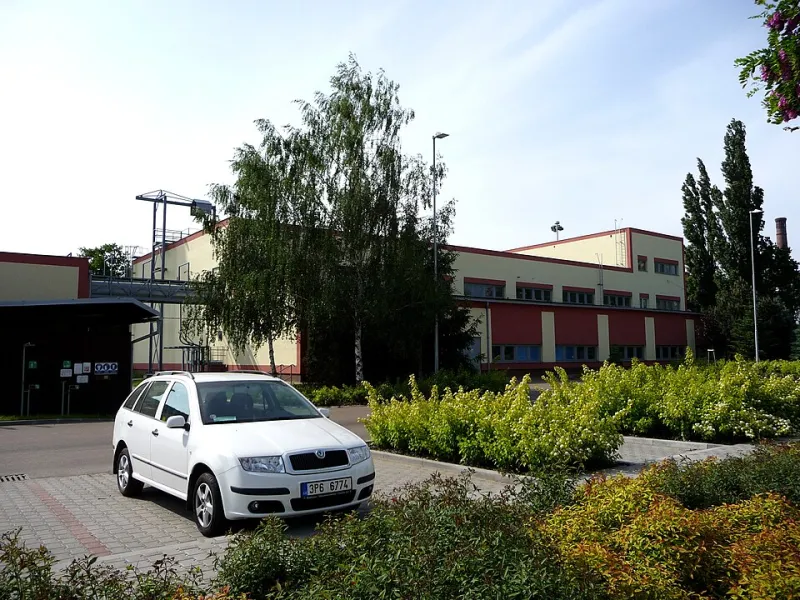
Photo: David J. Fred (Dfred), CC BY-SA 3.0, via Wikimedia Commons
There's a moment in every brewery tour when the guide gestures at the mash tun, the kettle, the fermentation tanks — all the shiny steel that visitors photograph. Then, almost as an afterthought, someone points at a wall of tanks, filters, and tubing that looks like a high school chemistry lab had a baby with a kidney dialysis machine.
"And that's the water system," they'll say, before moving on.
At the good breweries, that's not the afterthought. That's the whole show.
The Invisible 90 Percent
Beer is roughly 90 to 95 percent water, depending on the style. Yet when we talk about craft beer, we talk about hops, malt, yeast — the celebrities. Water is the session musician nobody credits.
But here's the thing: water is the reason certain beer styles exist where they do. The English town of Burton-on-Trent became the IPA capital of the world in the 1800s not because its brewers were geniuses, but because its groundwater was loaded with gypsum — calcium sulfate — which accentuates hop bitterness and crispness. Pilsen, Czechia, meanwhile, has water so soft it's practically a whisper, which is why the pilsners born there taste delicate, clean, almost weightless.
American brewers spent decades working around whatever came out of their municipal pipes. Today, a growing number treat water as a recipe ingredient, measured in parts per million, adjusted batch by batch.
A Week in the Water Program
I spent a recent week shadowing the water program at a mid-sized craft brewery in the Mountain West — the kind of place with a flagship pale ale you've probably seen in grocery stores from Boise to Boulder. What I found wasn't a lab coat fantasy. It was two people, a spreadsheet, a small reverse-osmosis rig, and food-grade mineral salts that look suspiciously like the stuff in your water softener.
Monday started the way every week starts: with the city's water report. Municipal water shifts seasonally — snowmelt in spring changes the mineral profile of what comes out of the tap, sometimes dramatically. The brewery's baseline water in April was not the water they brewed with in September.
"We don't chase a number," the brewer told me, gesturing at a printout of calcium, chloride, and sulfate levels. "We chase a feeling in the mouth. The spreadsheet just gets us there."
Same Beer, Different Universe
The demonstration that stuck with me: the team ran their flagship pale ale recipe five times in pilot batches, changing nothing except the water.
Batch one used their standard treated profile — moderately hard, chloride-forward. The beer was round and smooth, the hops more melon than pine.
Batch two went full Burton-on-Trent, sulfate cranked high. Same grain, same hops, same yeast — and the beer snapped to attention. Bitterness sharpened, the finish turned brisk and almost salty-dry. It tasted like a different brewery made it.
Batch three mimicked soft Pilsen water. The same pale ale went quiet. Flavors that had been shouting now murmured. Delicate, yes — but also a little lost, like a guitar player suddenly unplugged.
Batch four pushed chloride hard, which emphasizes malt sweetness and body. The beer got plush, bready, almost creamy.
Batch five was deliberately unbalanced, heavy on carbonate. It tasted flat and chalky, the hops muzzled. "That," the brewer said, "is what bad water tastes like. That's a lot of American beer before the 1980s."
Five batches. One recipe. Five genuinely different beers.
What 'Dry' and 'Mineral' Actually Mean
Here's the practical takeaway for your own drinking life.
Dry doesn't mean the beer lacks flavor — it means the finish cleans up fast. Sulfate-heavy water pushes bitterness forward and strips sweetness from the tail end of the sip. If a beer tastes crisp and snappy, like the flavor hits a hard stop, that's the sulfate talking.
Mineral is the texture, not the taste. Slightly hard water gives beer a fuller, almost velvety mid-palate. Too much carbonate, and you get that faint chalkiness — a dusty, flat quality that dulls hops and makes the whole pint feel heavier than it should.
Soft isn't automatically better. Soft-water beers — proper pilsners, German lagers — taste elegant because nothing is in the way. But a soft-water IPA is a waste of good hops. Style and water have to match.
Why This Matters at Your Local Taproom
You'll never see the water report taped to the tap list, but you can taste the decisions. If a brewery's lagers taste impossibly clean, someone is stripping their water down and rebuilding it. If their hazy IPA tastes juicy without the bitterness biting back, they've likely leaned chloride-heavy.
Next time you're at the bar, try this: order two beers from the same brewery — one hoppy, one malty — and pay attention only to the finish. The hoppy one should stop abruptly. The malty one should linger, rounded and soft. If both do what they're supposed to, somewhere in the back of that building, someone spent their Monday morning reading a water report.
Every pour is a translation. The recipe is the original text; the water is the language it's rendered in. The brewers who understand this aren't making beer. They're making the same beer sing in five different accents — and the best of them can tell you, sip by sip, exactly which accent you're hearing.