Alive in the Tank: What Fermentation's Ancient Roots Teach Us About the Beer in Your Hand
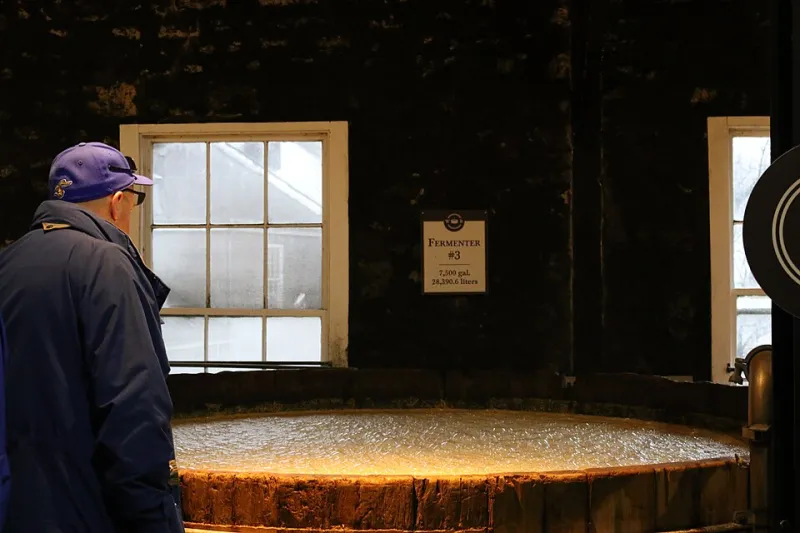
Photo: The U.S. Food and Drug Administration, Public domain, via Wikimedia Commons
There's a moment in every fermentation cycle that veteran brewers describe in almost hushed terms. The wort sits still in the tank, dense and sweet and expectant. Then, quietly, life begins. Bubbles rise. Foam forms. The liquid starts to move on its own. For a brewer who has witnessed it hundreds of times, it still carries a charge — something that feels less like chemistry and more like witnessing a small, private mystery.
That feeling isn't an accident, and it isn't just poetic. It's the echo of something that stretches back thousands of years, through monastery cellars, rice wine ceremonies, and clay vessels buried in the earth. The way contemporary craft brewers talk about fermentation — with patience, attentiveness, even a kind of devotion — isn't a marketing angle. It's the inheritance of a very long tradition.
When Brewers Didn't Know What They Were Doing (And Did It Anyway)
For most of human history, no one actually understood fermentation. The ancient Sumerians, who were producing beer around 4,000 BCE, attributed the process to Ninkasi, their goddess of brewing. Egyptian brewers left offerings near their fermentation vessels. Medieval European monks believed that the transformation of grain and water into something intoxicating and nourishing was, in the most literal sense, a gift from God.
What they were observing — and revering — was yeast, though they had no name for it and no microscope to see it. Louis Pasteur wouldn't identify yeast's role in fermentation until 1857. For millennia before that, brewers simply knew that something happened when the conditions were right. You could encourage it. You could mess it up. But you couldn't force it.
That helplessness in the face of a living process is part of what gave fermentation its spiritual weight. It demanded humility. You could control your grain bill and your water temperature, but the living organisms doing the actual work operated on their own schedule, with their own preferences. The brewer's job was to listen, observe, and get out of the way.
The Trappist Model: Patience as a Practice
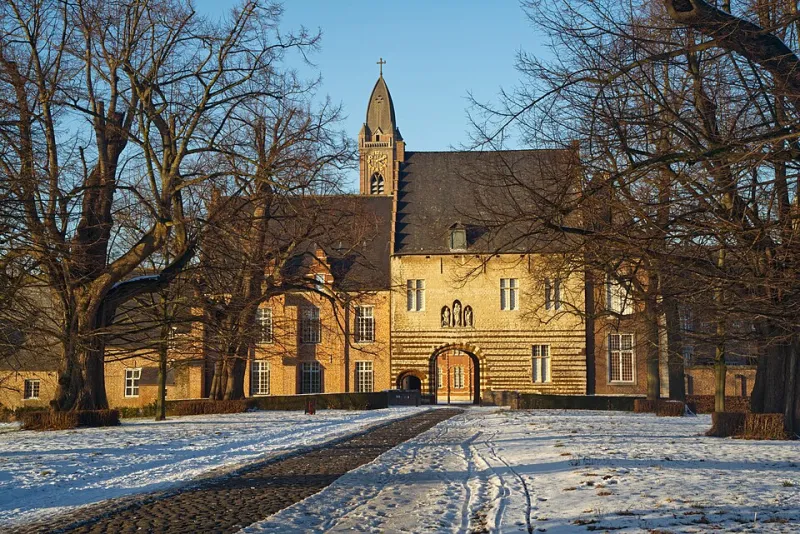
Nowhere is this philosophy more fully realized than in the Trappist brewing tradition of Belgium and the Netherlands. The monks at abbeys like Westvleteren and Chimay aren't brewing beer as a commercial enterprise in the conventional sense — production is limited, marketing is minimal, and profit is directed toward monastery upkeep and charitable work. The beer is almost incidental to the larger project of contemplative life.
And yet, or maybe because of that, the beer is extraordinary.
American craft brewers have been paying attention. Over the past decade, more and more small breweries across the U.S. have started applying what you might call Trappist-adjacent thinking to their operations — not the religion, but the underlying philosophy. Slow down. Prioritize process over output. Let the fermentation happen on its own terms. Don't rush the conditioning. Taste constantly, but intervene rarely.
Breweries like Jester King in Austin, Texas, and Allagash Brewing in Portland, Maine, have built their entire identities around this kind of patient, process-first brewing. Jester King's farmhouse ales ferment with wild yeast and bacteria native to the Texas Hill Country. Allagash's coolship beers are exposed to open air overnight before fermentation begins. In both cases, the brewer's role is less conductor and more careful steward — someone who creates favorable conditions and then trusts the process.
Koji, Sake, and the Eastern Thread
The contemplative approach to fermentation isn't exclusively Western or monastic. In Japan, the production of sake — and the cultivation of koji, the mold essential to it — has long been treated as a discipline requiring years of study, deep sensory attunement, and a kind of meditative focus that looks very different from industrial food production.
The toji, or master sake brewer, traditionally lived at the brewery during the production season, monitoring fermentation through smell, sound, and touch as much as measurement. Koji cultivation requires maintaining precise temperature and humidity in a small, warm room — a process that demands near-constant attention and a sensitivity to subtle environmental shifts that only comes with experience.
What's interesting is that American craft brewers experimenting with koji in their own operations often describe encountering the same thing: a process that teaches you to slow down, pay closer attention, and develop a different relationship with time. Several U.S. breweries, including Scratch Brewing in Ava, Illinois, have incorporated koji and other traditional fermentation agents into their beers — not as a gimmick, but as a genuine exploration of what fermentation can be when you approach it with full attention.
What This Means for the Drinker
So why does any of this matter to someone who just wants to enjoy a good beer on a Friday night?
Because context changes experience. When you know that the wild saison in your glass is the product of a fermentation process that the brewer couldn't fully predict or control — that the particular character of that beer exists because of specific microorganisms in a specific place at a specific time — it becomes something different. It becomes, in a small but real way, irreproducible. A document of a living moment.
That's not mysticism. It's just an honest description of what fermentation is. Every batch of beer that relies on living organisms is, to some degree, a collaboration between the brewer and something they can't fully see or direct. The ancient brewers who made offerings to their fermentation vessels weren't being irrational. They were acknowledging a genuine dependency.
Modern craft beer at its best carries that acknowledgment forward. The next time you open something from a small brewery that talks about wild fermentation, mixed culture, or extended conditioning, consider what went into it — not just the ingredients and the labor, but the patience, the attentiveness, and the willingness to trust a process older than recorded history.
That's what's in the glass. Drink accordingly.