Read the Invoice, Taste the Beer: What One Month of Utility Bills Says About Your $8 Pour
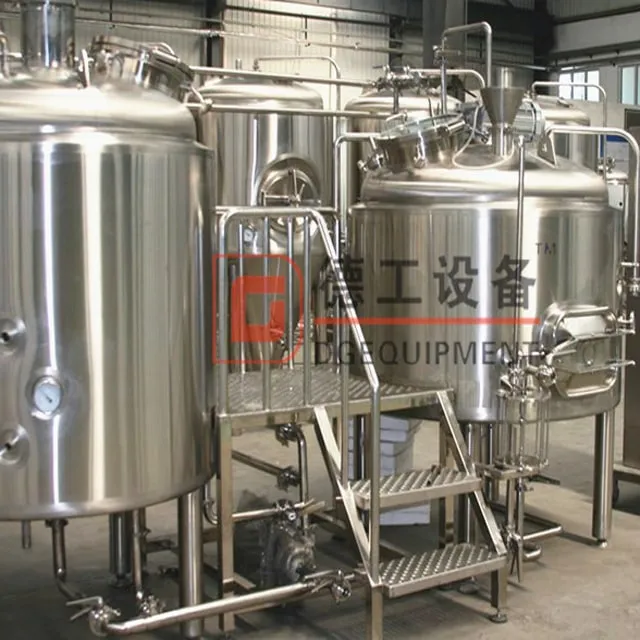
Photo: brewery brewhouse stainless steel tanks industrial brewing equipment, via rjrorwxhniiimm5p.ldycdn.com
There's a moment in every brewery tour when someone asks the question. It's usually phrased politely, but underneath it is real curiosity, maybe a little skepticism: why does this beer cost eight dollars?
Most answers talk about quality. Small batches, hand-selected hops, craftsmanship. All true. But the honest answer lives somewhere less romantic — in a stack of invoices taped to a corkboard in the brewhouse office, next to a calendar and a half-finished coffee.
We asked a mid-size brewery in the Midwest — about 8,000 barrels a year, the kind of place with a respected taproom and a distribution footprint you could drive across in an afternoon — to share a single month of utility and ingredient statements. What follows is an attempt to translate that paperwork into something you can hold in your hand the next time you belly up to the bar.
Start With the Water, Because Everything Starts With the Water
The water bill arrived first. For the month in question: roughly $1,400. That covers about 165,000 gallons of municipal water.
Here's the part that surprises people. Almost none of that water ends up in your glass. A typical brewery uses somewhere between four and seven gallons of water to produce one gallon of beer. The rest goes to cleaning tanks, chilling wort, rinsing lines, running the bottling line, and hosing down floors that take a beating daily.
So that $1,400 water bill? Spread across the roughly 21,000 pints' worth of beer produced that month, it's about seven cents a pour. Cheap, sure — but it's the first clue that a brewery is less like a bar and more like a small factory that happens to serve you a delicious product at the end.
The Power Bill Is the Invisible Ingredient
Next: electricity and natural gas, which together ran just over $6,200 for the month.
Brewing is a thermal business. You boil wort at a rolling boil for ninety minutes or more. You chill it rapidly. You keep fermentation rooms at a precise 48 degrees regardless of whether it's a heat wave in July or a polar vortex in February. Then there's the cold room where finished beer waits for the tap, and the glycol system humming in the corner that keeps it all consistent.
Per pint, that energy load works out to roughly thirty cents. Not the biggest line item, but consider what it buys: the difference between a clean, bright lager and a muddled one is often just temperature discipline, executed relentlessly, around the clock, while everyone else is asleep.
Grain: Where the Real Money Lives
If water and energy are the supporting cast, grain is the headliner. This brewery's monthly malt invoice came in around $18,000 — pale malt, some Munich and crystal for the amber, flaked oats for the stout, plus a smaller but eye-watering invoice for specialty hops.
Translated to the glass: raw ingredients account for somewhere between 60 and 90 cents of every draft pour, depending on the style. A big imperial stout with three pounds of specialty grain per barrel and a double dose of hops costs dramatically more to make than a standard bitter.
Which is worth remembering the next time you balk at a $10 barrel-aged pour. You're not paying for the same beer with a fancier label. You're paying for a different recipe entirely — one that consumes barrels, time, and warehouse space measured in months rather than days.
The Math of the $8 Pint
Add it all up — ingredients, utilities, packaging, labor, rent, insurance, loan payments on tanks that cost as much as a house — and the full cost of producing that pint lands somewhere between $2.50 and $3.50 for most mid-size breweries. The remainder of your $8 covers service, the taproom experience, and a margin thin enough that a single failed batch can erase a week's profit.
Run the same math for a mass-produced domestic lager and you'll see why the big guys can sell at prices craft breweries can't touch: scale. When you brew millions of barrels, every one of those line items shrinks to fractions of a cent. A brewery making 8,000 barrels doesn't get that luxury. It buys grain by the pallet, not the train car.
Why the Pour Is a Bargain Anyway
Here's the argument the invoices quietly make: the $8 pint isn't expensive. It's precise.
Think about what else costs eight dollars. A forgettable cocktail at an airport bar. Two coffees and a pastry. And in exchange for that same eight dollars, a craft taproom hands you a beer made by people whose names you can learn, with water from your watershed, brewed in a building you can stand inside while you drink it.
There's also something almost ceremonial in the transparency. Every great pint is the visible surface of an invisible ledger — gallons scrubbed, degrees held, sacks of grain lifted by hand before most of the town is awake. The receipt on the corkboard isn't the opposite of the romance. It is the romance, just written in a drier hand.
So the next time you're handed a pint and pause at the price, consider the month of water, fire, and grain standing behind it. Then raise the glass. At eight dollars, you're not overpaying. If anything, you're getting away with something.