Forty-Eight Hours of Glory: Inside the Race to Brew Beer With Hops Still Warm From the Vine
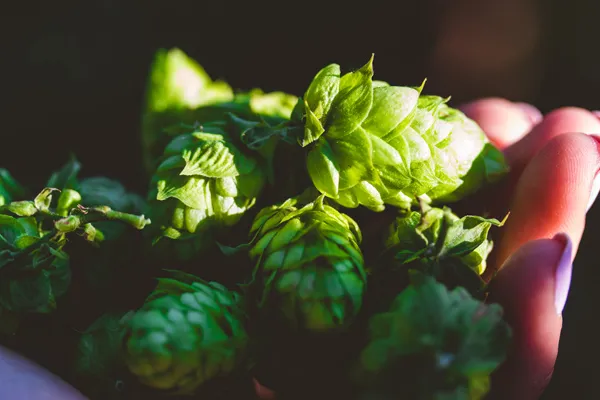
Photo: fresh hop harvest Yakima Valley hops bine hands holding green hop cones, via yakimavalleyphotography.com
There's a moment, somewhere in the first weeks of September, when the beer industry collectively holds its breath. In the hop fields of Washington's Yakima Valley, tractors are running before sunrise. In breweries scattered across the country, kettles are being cleaned, schedules cleared, and phone lines kept open. Everyone is waiting on the same thing: cones of hops so fresh, so perishable, that they begin losing their magic the second they leave the bine.
This is fresh-hop season — craft beer's shortest, most frantic, and most beloved ritual.
What Makes a Hop "Wet"
The vast majority of beer in America is brewed with dried hop pellets, a format that's stable, stackable, and shippable. Pellets can sit in a cold storage room for a year or more without losing much of their character. Wet hops — sometimes called fresh hops — are a different animal entirely. They're used within hours or days of harvest, still holding up to 80% of their moisture, still green, still fragrant in a way that no processed product can quite imitate.
That freshness comes with a cost. Wet hops can't be stored, can't be warehoused, and can't wait. The oils that give them their piney, resinous, almost herbal brightness begin to degrade almost immediately. Which is why the fresh-hop beer you drink in October exists only because someone, somewhere, moved very fast.
The Harvest Is a Countdown
Spend a morning in Yakima Valley during harvest and you'll understand the urgency. The valley produces roughly three-quarters of the hops grown in the United States, and during the late-summer rush, its fields and processing facilities run at a pace that borders on controlled chaos.
Growers pick in the morning. Kilns are reserved, sometimes at a premium, for the cones that need drying. But for the wet-hop trade, the kiln is skipped altogether — the cones go straight from the field into breathable sacks, and the sacks go into a truck. From there, it's a relay. Some breweries within driving distance of the valley pick up their own hops the same day they're cut. Others pay for overnight freight, or in the most dedicated cases, charter a plane. Brewers have been known to drive hours through the night to collect a load themselves, unwilling to trust anyone else with the timing.
"You're not really buying hops," one Washington brewer told us. "You're buying a window. And the window is closing from the minute they're cut."
Why Brewers Bother
If it's this hard, why do it at all? Because the result is unlike anything else in beer.
Wet-hop beers tend to taste greener, softer, and more vivid than their pellet-brewed cousins. Where dried hops often deliver sharp citrus and punchy resin, fresh cones lean toward grassy, floral, lightly vegetal notes — a gentleness that tasters describe as "green" in the best sense. It's less a louder hop beer and more a truer one, a snapshot of the plant as it existed in the field.
That transience is part of the appeal. Fresh-hop beers can't be brewed in February. They can't be scaled up on demand or reproduced in a different hemisphere. Each batch is tethered to a specific harvest, in a specific valley, during a specific week. Drink one in November and you're drinking a memory of September.
A Ritual Worth Keeping
For the growers, the season is the culmination of a year's work. For the truckers and freight coordinators, it's a logistical sprint. For the brewers, it's a test of planning and humility — you can't force wet hops to cooperate, and recipes often change on the fly based on what arrives and when.
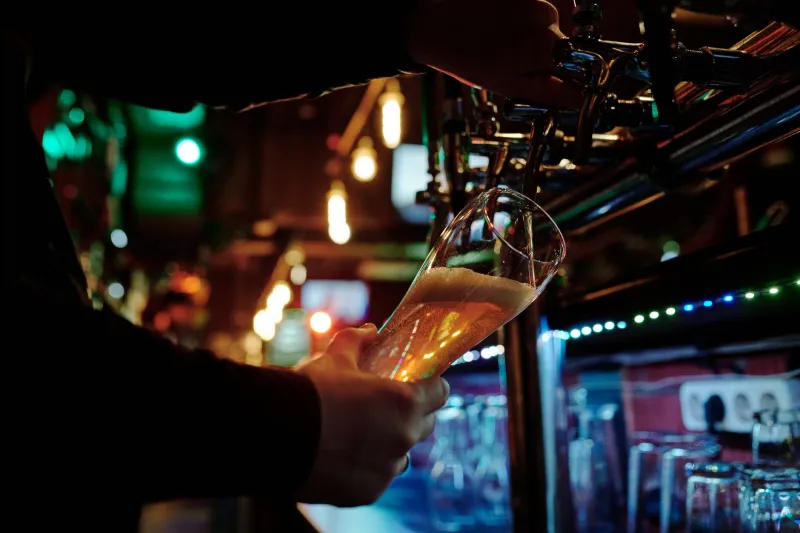
And for drinkers, it's become one of craft beer's most anticipated annual traditions. Taprooms across the West — and increasingly across the country — fill with fresh-hop releases each fall, and festivals dedicated to the style draw crowds who know they're tasting something that will be gone within weeks.
There's something fitting about that. In an industry built on consistency and repeatability, the fresh-hop window is a reminder that some of the best things in beer are fleeting. The vines are cut, the clock starts, and for about forty-eight hours, the fields and the kettles are connected by nothing but urgency and devotion.
When the last truck arrives and the last batch goes into the boil, the window closes for another year. What's left in the glass is the harvest itself — alive, green, and impossibly brief.