Liquid Gold Under Pressure: The Fight to Protect Craft Beer's Most Essential Ingredient
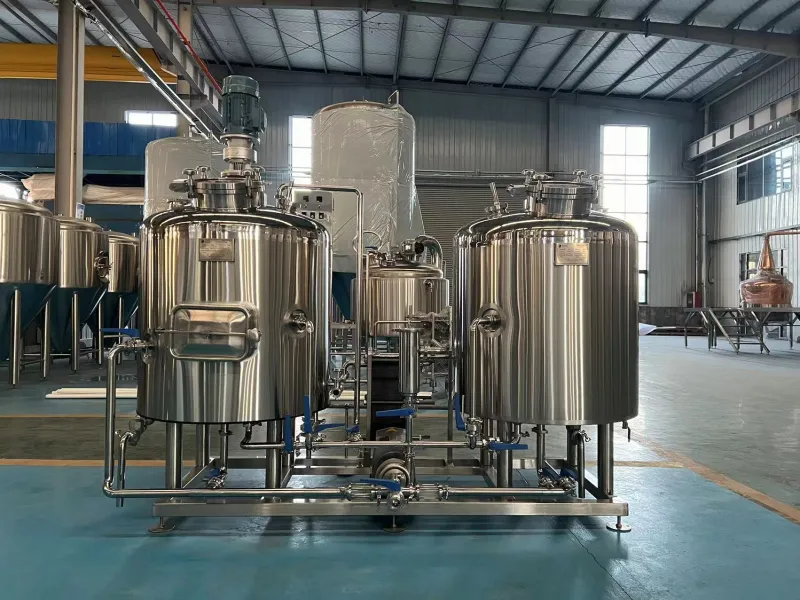
Photo: craft brewery water treatment facility industrial pipes tanks, via sc04.alicdn.com
Before the hops. Before the malt. Before the yeast does its slow, mysterious work in the tank — there is water. It makes up roughly 90 to 95 percent of every pint you've ever lifted to your lips, and yet it's the ingredient that gets the least real estate on a tap menu or a tasting flight card. That oversight might have been forgivable once. It isn't anymore.
Across the United States, craft breweries are quietly confronting a crisis that doesn't make for pretty Instagram content: the water is getting harder to reach, harder to afford, and in some regions, harder to justify using at all. The conversation happening in brew houses from Colorado to California isn't about IBUs or dry-hop schedules. It's about survival.
The Hidden Calculus Behind Every Pint
Here's a number that tends to land hard: it takes somewhere between four and seven gallons of water to produce a single gallon of finished beer. That's before you factor in cleaning, cooling, steam generation, and the general operational demands of running a functioning production facility. For a mid-size craft brewery cranking out a few thousand barrels a year, that math adds up to millions of gallons annually.
For most of American brewing history, that kind of consumption barely registered as a concern. Municipal water was reliable, aquifer levels seemed inexhaustible, and the craft beer boom of the 2000s and 2010s was built on the assumption that the taps would keep flowing. Nobody planned for drought cycles that stretch across multiple years. Nobody planned for cities hiking commercial water rates by double digits. Nobody planned for the moment a brewery in the Colorado River Basin would get a letter explaining that their water allocation had been reduced.
That moment has arrived for a lot of brewers. And the ones responding most creatively are rewriting what it means to be a responsible craft producer.
Closed Loops and Reclaimed Futures
New Belgium Brewing in Fort Collins, Colorado has been operating with what amounts to a closed-loop water philosophy for years, and their work offers a blueprint that smaller operations are increasingly trying to adapt. Their onsite water treatment facility processes wastewater from the brewing process and converts it into biogas, which then generates electricity for the brewery. It's not just conservation — it's a full-circle system where waste becomes resource.
For smaller breweries without New Belgium's infrastructure budget, the solutions tend to be scrappier but no less intentional. Odell Brewing, also out of Fort Collins, has invested heavily in heat exchanger technology that recaptures the water used during wort cooling — a stage of brewing that traditionally sends significant volumes of hot water down the drain. That recaptured water gets cycled back into cleaning processes, cutting overall consumption without touching a single recipe.
Down in the Texas Hill Country, a region that has watched its aquifers strain under agricultural and residential pressure, a handful of craft producers have started partnering directly with watershed conservation groups. The arrangement is straightforward: the brewery funds recharge projects and erosion control work on local land, and in exchange, they get a more stable and accountable relationship with the water source they depend on. It's not charity. It's long-term self-interest dressed up in something that also happens to be genuinely good.
When the Municipality Becomes the Competition
The tension between craft breweries and their municipal water suppliers is a story that doesn't get told enough. In drought years, cities face impossible triage decisions — residential use, hospital systems, agricultural contracts, and commercial operations all competing for the same shrinking resource. Craft breweries, despite their cultural cachet and economic contribution to local neighborhoods, are rarely at the front of that line.
Several Pacific Northwest breweries have started navigating this by drilling private wells and working with hydrologists to monitor draw rates against aquifer recovery data. It's expensive, and it comes with its own regulatory maze, but it gives those operations a degree of independence from municipal systems that increasingly feel fragile. The tradeoff is stewardship — taking on the responsibility of monitoring your own impact rather than outsourcing that accountability to a utility.
Some brewers have gone further, publishing annual water use reports alongside their production numbers. It's a transparency move that connects directly to the values of the craft beer community, where the story behind the product has always mattered as much as the product itself.
The Flavor Argument for Taking Water Seriously
There's a dimension to all of this that goes beyond ethics and economics, and it's the one that tends to get craft brewers genuinely animated: water chemistry shapes flavor in ways that most drinkers never consciously register but absolutely feel.
The mineral content of water — its hardness, its sulfate levels, its chloride balance — has a direct and measurable effect on how bitterness reads, how malt sweetness develops, and how clean a beer finishes. The reason Burton-on-Trent became synonymous with pale ales isn't historical accident; it's geology. The high sulfate content of Burton water accentuates hop bitterness in a way that soft water simply can't replicate. Brewers who understand their water aren't just conserving a resource — they're working with a living ingredient that carries the fingerprint of a specific place.
That connection between water source and flavor profile is part of what makes the conservation conversation feel urgent in a way that transcends regulatory compliance. When a brewery loses access to a particular aquifer or watershed, they don't just lose water. They lose a flavor note that can't be fully manufactured. The terroir of beer is real, and it starts before the grain ever gets milled.
Protecting the Source Before the Source Is Gone
The breweries getting ahead of this aren't waiting for a crisis to force their hand. They're auditing their water use the way a serious chef audits a supply chain — with genuine curiosity about where it comes from, what it costs the land to provide, and what it would mean to lose it.
Some are installing real-time flow meters throughout their facilities to identify waste points that would otherwise stay invisible. Others are redesigning their cleaning-in-place systems to use less water per cycle without compromising sanitation standards. A few are experimenting with dry-hopping and cold-side adjustments that reduce the number of rinse cycles required during production.
None of these changes are glamorous. None of them will end up on a tap handle or a can label. But they represent a kind of brewing philosophy that takes the sacred ingredient seriously — not as a metaphor, but as a finite resource that deserves the same reverence we give to a rare hop variety or a well-tended barrel program.
Every pour starts somewhere. The brewers who know exactly where that somewhere is — and who are fighting to protect it — are the ones worth paying attention to.